AI Cinematics: The New Language of Advertising
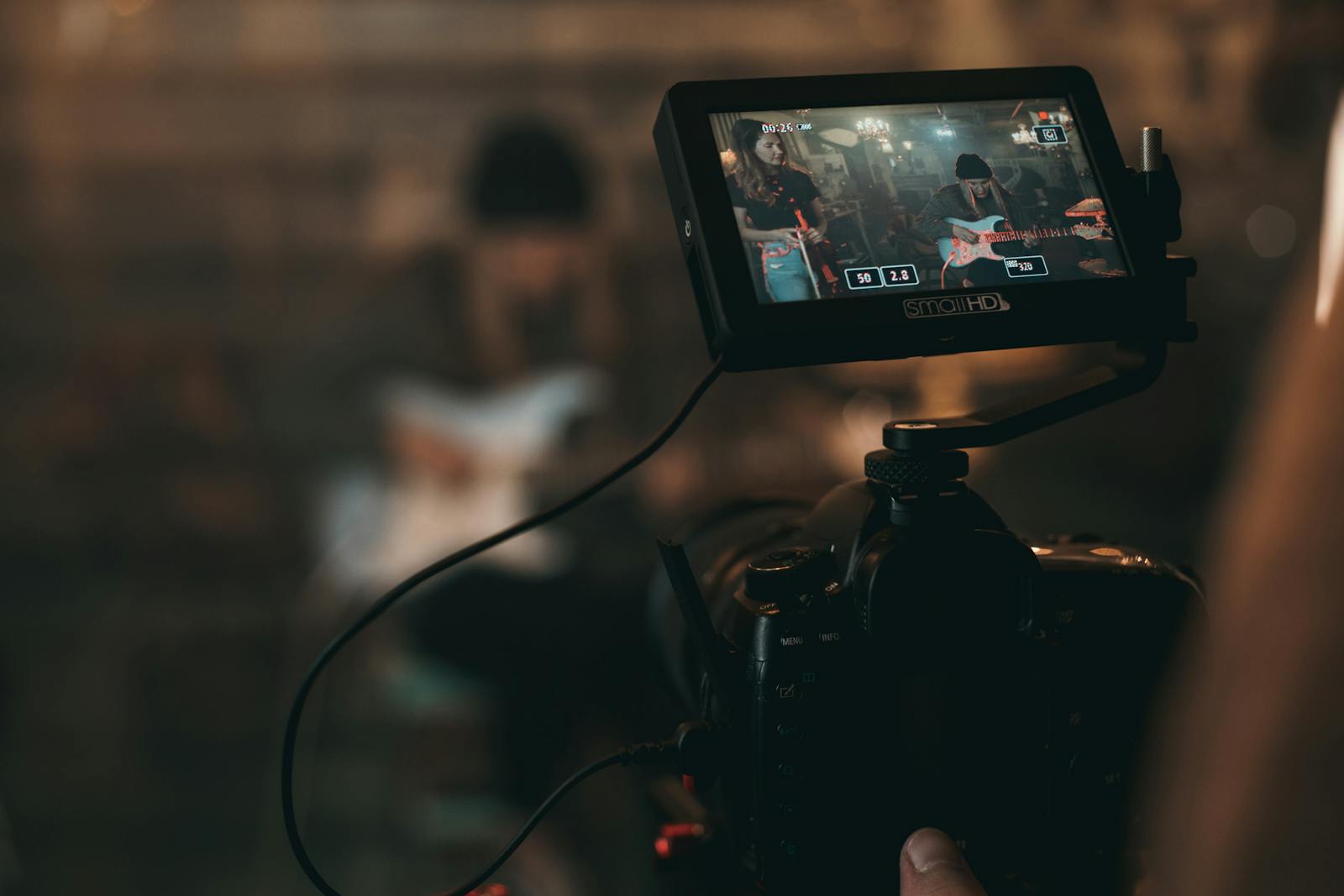
How generative pipelines are compressing weeks of production into days. A look at how AI cinematics is changing the economics and craft of advertising.
Introduction A car commercial that once required a location scout, a rented vehicle, a crew of thirty, and three days of shooting can now be storyboarded, generated, and refined inside a software pipeline in a fraction of that time. This isn't a hypothetical future. It's already how a growing number of advertising studios are working, and it's changing what "production" actually means. AI cinematics, the use of generative video and image models to create advertising visuals, is compressing timelines that used to be measured in weeks into days, sometimes hours. But speed is only part of the story. The bigger shift is in how creative decisions get made, who makes them, and what kind of visual language becomes possible when the constraints of physical production loosen. This article looks at how these pipelines actually work, what they're good at, where they still fall short, and what that means for anyone working in advertising today. What "AI Cinematics" Actually Means The term covers a range of techniques, not a single tool. In practice, an AI cinematics pipeline for advertising typically combines: • Text‑to‑image and text‑to‑video generation for initial concept visuals • Image‑to‑video models that animate a still frame into motion • AI‑assisted editing tools for color grading, compositing, and upscaling • Voice and audio generation for scratch tracks or final voiceover • 3D and virtual production tools that blend generated backgrounds with live footage Few agencies rely on generative AI for an entire finished ad end to end. More commonly, it's woven into specific stages: generating dozens of concept variations before a shoot, creating background plates that would otherwise require expensive location work, or producing quick animatics that used to take a storyboard artist days to illustrate. Common Misconception: AI Replaces the Entire Production Process A frequent assumption is that generative AI eliminates the need for cameras, sets, and crews altogether. In most current advertising workflows, that isn't accurate. AI cinematics tends to replace or compress specific bottlenecks, particularly pre‑visualization, background generation, and iteration, while live‑action elements like product shots and talent performances are often still filmed conventionally and then composited or enhanced. Why Speed Alone Isn't the Real Story It's tempting to frame this shift purely around timelines, and the speed gains are real. Concept development that once took a creative team a week of sketching and reference gathering can now produce dozens of visual directions in an afternoon. But the more meaningful change is in how creative risk gets managed. Traditionally, an agency had to commit to a creative direction relatively early, because reshoots are expensive and location bookings are hard to reverse. Generative pipelines let teams explore more directions before committing budget to physical production. A director can generate five different visual treatments of the same concept, show them to a client, and get feedback before a single camera rolls. Practical Implication for Creative Teams This changes the role of early‑stage creative work. Instead of a single polished pitch deck, teams increasingly present a range of AI‑generated visual directions, which shifts client feedback earlier in the process and reduces the odds of expensive revisions after a shoot. Where Generative Pipelines Fit in a Real Production Timeline A useful way to understand the impact is to walk through where AI tools typically enter an advertising production timeline. 1. Concept and pitch stage. AI‑generated mood boards and animatics replace or supplement traditional storyboard illustration, giving clients a clearer sense of tone and pacing before approval. 2. Pre‑visualization. Directors use AI video generation to test camera angles, lighting moods, and pacing before scheduling an actual shoot. 3. Production. Live footage is captured for elements that require real actors, real products, or precise brand accuracy, since generative models still struggle with exact product likeness and consistent human faces across shots. 4. Post‑production. Generated backgrounds, environment extensions, and effects are composited with live footage. AI upscaling and frame interpolation smooth out lower‑resolution generated elements. 5. Localization. AI voice and lip‑sync tools adapt a single ad into multiple languages without reshooting talent for each market. This staged approach explains why total production time drops sharply even though live‑action shooting hasn't disappeared. The stages that used to consume the most calendar time, concept approval cycles and location‑dependent shooting, are the ones most affected by generative tools. The Product Accuracy Problem One of the most persistent limitations in AI cinematics for advertising is product fidelity. Generative video models are trained on broad visual data and don't inherently know the exact dimensions, logo placement, or material finish of a specific product. For a beverage brand, a slightly wrong bottle shape or label detail isn't a minor issue, it's a brand compliance failure. Studios working around this typically use one of a few approaches: • Filming the actual product conventionally and compositing it into an AI‑generated environment • Fine‑tuning a generative model on a controlled set of approved product images • Using 3D product renders integrated into the generated scene rather than relying on the generative model to invent the product from scratch This is why fully AI‑generated advertising, where every element including the product itself is generated, remains relatively rare for brand‑sensitive campaigns. Most current work is closer to a hybrid model. Cost Implications, and Where the Savings Actually Come From The financial case for AI cinematics is usually made in terms of reduced production budgets, and there is real savings potential, but it's concentrated in specific line items rather than spread evenly across a project. Where AI reshapes the budget: • Location shooting. Traditional cost driver: travel, permits, crew days. AI impact: reduced for background and environment shots. • Concept visualization. Traditional cost driver: storyboard artists and revision cycles. AI impact: significantly faster and cheaper. • Talent and product shots. Traditional cost driver: casting and product logistics. AI impact: largely unchanged for brand‑critical elements. • Localization. Traditional cost driver: reshoots or dubbing per market. AI impact: reduced through AI voice and lip‑sync tools. • Post‑production effects. Traditional cost driver: VFX artist hours. AI impact: reduced for environment extension and cleanup work. Notably, the savings are smallest where brand accuracy and human performance matter most, which is exactly where advertisers tend to be least willing to compromise anyway. What This Means for Creative Roles The shift doesn't eliminate creative roles so much as redistribute where time gets spent. Directors and creative leads are spending more time art‑directing generative outputs, refining prompts, and curating from a larger pool of generated options, rather than waiting on hand‑drawn storyboards or location scouting reports. This has raised legitimate concerns within the industry, particularly around illustrators, storyboard artists, and background talent whose traditional work is most directly affected by generative tools. Agencies vary widely in how they've responded, from restructuring roles around AI‑assisted workflows to maintaining separate traditional production tracks for campaigns where clients specifically request it. Common Mistakes When Adopting AI Cinematics Agencies moving into this space quickly encounter a few recurring issues: • Skipping brand guideline integration, leading to generated visuals that look impressive but don't match established brand color, tone, or product presentation standards. • Underestimating post‑production cleanup time, since raw generative output often needs color correction, artifact removal, and compositing work that isn't accounted for in initial timeline estimates. • Over‑relying on generation for hero product shots, which frequently results in inaccurate product details that require reshoots anyway. • Treating AI tools as a one‑time cost saver rather than building a repeatable workflow, which limits long‑term efficiency gains. Key Takeaways • AI cinematics is most effective when applied to specific bottlenecks like pre‑visualization, background generation, and localization, rather than replacing full production. • Product accuracy remains a significant limitation, which is why hybrid workflows combining live footage with generated environments are currently the norm for brand campaigns. • Cost savings are concentrated in concept development, environment work, and localization, not in talent or product‑critical shots. • Creative roles are shifting toward curation and art direction of generated outputs rather than disappearing entirely. • Agencies that build repeatable, brand‑integrated workflows tend to see more consistent value than those treating AI tools as a one‑off shortcut. Frequently Asked Questions Is AI cinematics replacing traditional advertising production entirely? Not currently. Most advertising work uses AI cinematics for specific stages like pre‑visualization, background generation, and localization, while live‑action filming is still used for product shots and talent performances that require exact accuracy. Why can't AI models generate accurate product shots? Generative video models are trained on broad visual datasets and don't have precise knowledge of a specific product's exact dimensions, materials, or branding details, which makes them unreliable for brand‑critical product representation without additional fine‑tuning or compositing. How much time can AI cinematics actually save in production? Time savings vary by project, but the largest reductions typically occur in concept development and pre‑visualization stages, where AI tools can generate multiple visual directions in hours instead of the days or weeks traditional storyboarding requires. Does using AI cinematics reduce the need for a creative director? No. It shifts where a creative director's time goes, from managing traditional storyboard revisions and location logistics toward art‑directing and refining generative outputs, which still requires strong creative judgment. What industries are adopting AI cinematics fastest? Advertising verticals with high production volume and frequent localization needs, such as consumer goods, automotive, and technology brands, have generally been early adopters, largely because the efficiency gains scale well across many market variations of the same core concept. Are there ethical concerns with AI cinematics in advertising? Yes, particularly around the displacement of traditional production roles like illustrators and background talent, as well as questions about transparency when AI‑generated elements appear in advertising without being disclosed to viewers. Conclusion AI cinematics isn't a single technology replacing advertising production wholesale. It's a set of tools reshaping where time, money, and creative attention get spent within a production timeline. The agencies getting the most value aren't necessarily the ones generating the flashiest visuals, they're the ones that have figured out where generative tools genuinely remove a bottleneck and where traditional production still does the job better. That distinction, more than the technology itself, is what will define how advertising actually looks over the next few years. Ready to test AI cinematics on your next campaign? Start by mapping your current production timeline and identifying which stages are genuinely bottlenecked by cost or scheduling, rather than assuming AI tools should touch every part of the process. Exora's creative studio can help you scope a hybrid pilot for your next brief.